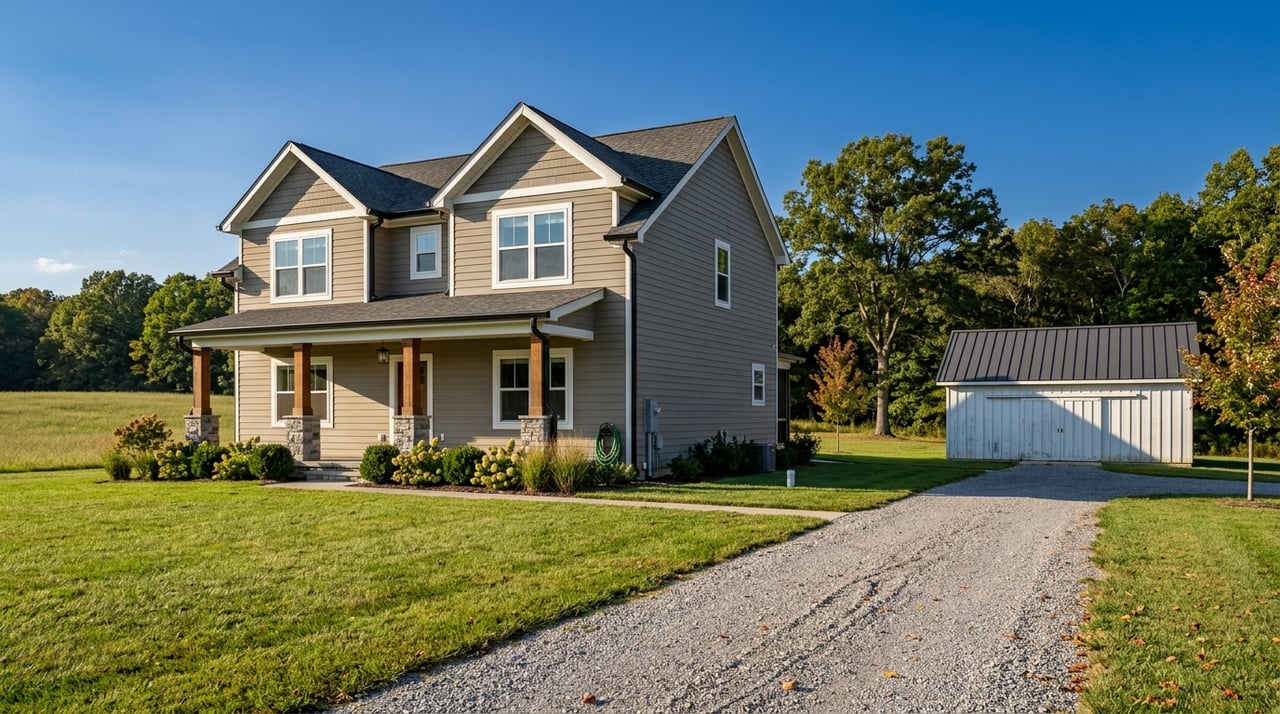
Dreaming about a few acres, a garden, maybe a barn or chicken coop, and room to spread out near Greeneville? That kind of property can be a great lifestyle fit, but buying land for a mini farm is very different from buying a typical house lot. Before you close, you need to know how the land is zoned, whether septic will work, how access is handled, and where outbuildings can realistically go. If you want to avoid expensive surprises and buy with confidence, this guide will help you focus on the right questions first. Let’s dive in.
Start With Jurisdiction and Zoning
One of the biggest mistakes land buyers make is assuming all rural-looking property near Greeneville follows the same rules. It does not. Greeneville’s zoning ordinance applies inside the town’s corporate limits, while land outside the city limits but inside the Town’s Urban Growth Boundary is subject to Greene County zoning.
That means two parcels on nearby roads can have different development rules. Before you get too far into plans for a mini farm, confirm whether the property is in the Town of Greeneville or under Greene County jurisdiction. That one detail affects what office you call, what rules apply, and how your plans will be reviewed.
Why A-2 and R-1 Matter
In Greene County, two zoning districts often come up for buyers looking at small acreage: A-2 Agriculture-Residential and R-1 Low Density Residential. Both allow customary general farming, but they are not identical.
The A-2 district is designed for low-density rural residential development where certain farm uses remain compatible. The county ordinance lists detached single-family dwellings, public utilities, customary general farming, and customary incidental home occupations as permitted uses. It also sets a minimum lot area of 1 acre for single-family structures and 3 acres for other uses in that district.
R-1 also permits customary general farming and customary accessory buildings. However, accessory structures must be reviewed before permit issuance and are subject to setback and size limits. For a single-family dwelling, the ordinance sets a minimum lot area of one-half acre, but if the property is not served by sanitary sewer, the lot also has to meet Tennessee Department of Environment and Conservation requirements.
Think Beyond the House Site
When you buy land for a mini farm, the zoning question is not just whether you can build a house. You also need to think about the improvements you may want later, such as a barn, run-in shed, chicken coop, workshop, or additional fencing.
The safest approach is to ask whether your intended use fits the zoning district now and after improvements are added. In Greene County, the building commissioner enforces zoning and issues permits. Within the Town of Greeneville, the planning and development department handles zoning and development review.
Put Septic and Utilities Near the Top
For many land buyers, utilities and septic are the true make-or-break items. A property may look perfect on paper, but if service is limited or the septic layout does not support your plans, your options can narrow quickly.
Water service in the area may be available through Glen Hills Utility District, and Greeneville Energy Authority provides electric power and fiber internet service. Still, availability should be verified parcel by parcel. You should never assume a road frontage automatically means the property has the same utility access as a neighboring tract.
Septic Questions to Answer Early
Greene County Environmental Health issues septic permits within the county and operates under TDEC rules for subsurface sewage disposal systems. The office can also perform bacteriological testing on private water supplies, which can be helpful if a property relies on a private water source.
TDEC says a septic system permit should be obtained before any dirt work or building pad construction begins. That matters because some buyers want to start clearing land right after closing, but moving dirt too early can create setbacks if the septic process has not been handled correctly.
If the parcel already has a septic system, ask for the available septic records early. TDEC says an inspection letter documenting the status of an existing septic system is routinely requested when property is being sold, mortgaged, or considered for subdivision plat approval. For buyers and lenders, that can be one of the most useful documents in the file.
Outbuildings Can Affect Septic Too
Many buyers focus on septic only in relation to the house. That is only part of the story. TDEC also says a septic modification permit may be required if a garage, shop, barn, or similar project affects an existing septic system.
In practical terms, the septic layout may control more of your mini farm design than you expect. The drainfield and reserve area can shape where you place fences, gates, sheds, and future farm buildings.
Check Access, Survey Work, and Drainage
A beautiful parcel is not very useful if access is unclear or difficult to improve. Before you buy, make sure you understand exactly how you will reach the property, whether access is recorded, and what permits may be required.
If the parcel fronts a state highway, TDOT requires a driveway permit before construction of a driveway on state highway right-of-way. That includes changes to an existing driveway. So access is not just about convenience. It can also be a permitting issue that affects your timeline and budget.
Private Roads and Easements Need Extra Review
Some mini farm parcels are served by private roads, shared driveways, or easements. Greene County subdivision regulations say permanent easements must have direct access to an existing open highway, street, or accepted thoroughfare, and the county will not maintain permanent easements.
That is important to understand before you buy. If a parcel depends on private access, you want to confirm where that access is located, whether it is recorded, and what maintenance responsibilities may come with it.
GIS and Deed Records Both Matter
Greene County GIS is useful for visualizing parcel boundaries and other land data. But GIS is only one piece of the picture. The Register of Deeds is the county’s official record keeper for real property documents, so deed records are a key source for confirming boundaries, easements, and recorded restrictions.
For most acreage buyers, this means it is smart to compare what you see on a map with what is actually recorded. If a fence line, driveway, or boundary assumption is important to your plan, verify it before closing.
Budget for Survey and Staking
Survey work is often worth the cost when you are buying land for a mini farm. Greene County says that for new construction, property lines and the structure must be staked with 18-inch stakes for the zoning inspection.
That requirement is a good reminder that survey and staking costs should be part of your planning. They are not just optional extras if you are preparing to build or place structures accurately.
Drainage and Flood Review Can Matter
If the land is inside Greeneville, stormwater and floodplain review may also come into play. The town notes that it is an EPA Phase II stormwater community and does not maintain drainage structures on private property without a drainage easement. The county building commissioner also serves as the FEMA flood administrator for Greene County.
Even if a property looks dry during a showing, drainage patterns and flood-related review can still affect where you build and how you design improvements. That is especially true if the parcel has low spots, creeks, or visible drainage paths.
Plan Barns, Sheds, and Fencing Carefully
On a mini farm, the layout matters almost as much as the acreage total. A property can have enough land on paper, but poor placement of the house, septic area, outbuildings, and fencing can limit how functional it feels day to day.
In Greene County’s A-2 district, the ordinance was written to allow certain farm uses to continue alongside low-density rural residential development. That can be helpful for buyers who want a small-scale farm setup. Still, the exact district rules for the parcel should always be confirmed before you finalize plans.
Accessory Building Rules Matter
In R-1, customary accessory buildings must be reviewed before permit issuance. If they are placed in the rear yard, they must be at least 5 feet from the side and rear property lines and must stay within the ordinance’s size limits.
That means a future shed or barn should not be treated as an afterthought. It is much better to choose the location after you understand setbacks, permit review, and septic constraints.
Fencing Is Not Just a Boundary Issue
Fencing can seem simple, but it often depends on more than the property line. Before construction, it is wise to confirm property boundaries, easements, utility corridors, driveway sight lines, and any applicable buffer requirements.
Greene County’s zoning resolution does require plant material or fencing buffers in some situations where lots abut residential uses. So if fencing is part of your mini farm plan, make sure the design fits the parcel’s actual zoning and layout conditions.
Be Realistic About Greenbelt Tax Assumptions
Some buyers assume a mini farm will automatically qualify for Tennessee greenbelt tax treatment. That is not always the case. The state says greenbelt values qualifying land based on current use rather than market value, but agricultural land generally must be at least 15 acres and meet use requirements.
For a smaller mini farm near Greeneville, that means you should not build your budget around greenbelt treatment unless you have confirmed eligibility. It is better to verify that detail early than to count on a tax benefit that may not apply.
Build Your Due Diligence Team Early
Buying land near Greeneville for a mini farm usually goes more smoothly when you talk to the right offices early in the process. A few phone calls up front can save you time, money, and frustration later.
Helpful early contacts may include:
- Greene County Building & Zoning for setbacks, zoning questions, and permits
- Greene County Environmental Health for septic questions
- TDOT if the property fronts a state road
- Glen Hills Utility District for water availability
- Greeneville Energy Authority for electric and fiber availability
- UT Extension Greene County for soil and forage questions
- Greene County GIS and the Register of Deeds for boundaries, easements, and recorded access
UT Extension Greene County can be especially helpful for local soil testing and agriculture or horticulture support. Just keep in mind the office does not test drinking water, create soil percolation maps, or handle septic system evaluation.
After closing, land stewardship support may also be available. NRCS Tennessee offers free technical assistance and financial assistance for conservation practices, which may help with pasture improvement, erosion control, drainage, and related projects.
If financing is part of your plan, it may also be worth asking lenders whether your purchase could fit a farm-oriented loan product. USDA Farm Service Agency says Farm Ownership Loans can be used to buy land, and its down payment program is designed to help beginning farmers and ranchers.
A Smart Mini Farm Purchase Starts With the Right Questions
The dream of a mini farm near Greeneville is easy to picture. The smart part is making sure the land can support that vision before you buy it.
If you verify jurisdiction, zoning, septic, utilities, access, and layout early, you will be in a much stronger position to choose the right property and avoid costly surprises. And when you work with a local agent who understands acreage, rural property questions, and the moving parts behind land purchases, the process becomes much easier to navigate.
If you are looking for land or acreage in the Greeneville area and want practical, local guidance, Matt Fleenor can help you evaluate properties with your long-term plans in mind.
FAQs
What zoning should you check when buying mini farm land near Greeneville?
- You should first confirm whether the parcel is inside Greeneville or under Greene County jurisdiction, because nearby properties can be subject to different zoning rules.
What septic questions matter for Greeneville-area land buyers?
- You should verify whether a septic permit can be issued, review any existing septic records early, and make sure future plans for barns, shops, or other structures will not interfere with the septic area.
What utility providers should you verify for land near Greeneville?
- Buyers should confirm parcel-specific availability for water through Glen Hills Utility District and electric and fiber service through Greeneville Energy Authority rather than assuming nearby properties have the same access.
What access issues can affect mini farm land in Greene County?
- You should confirm recorded access, review easements carefully, and check whether a TDOT driveway permit is needed if the parcel fronts a state highway.
Will a small mini farm near Greeneville qualify for Tennessee greenbelt?
- Not automatically, because Tennessee says agricultural land generally must be at least 15 acres and meet use requirements to qualify for greenbelt treatment.